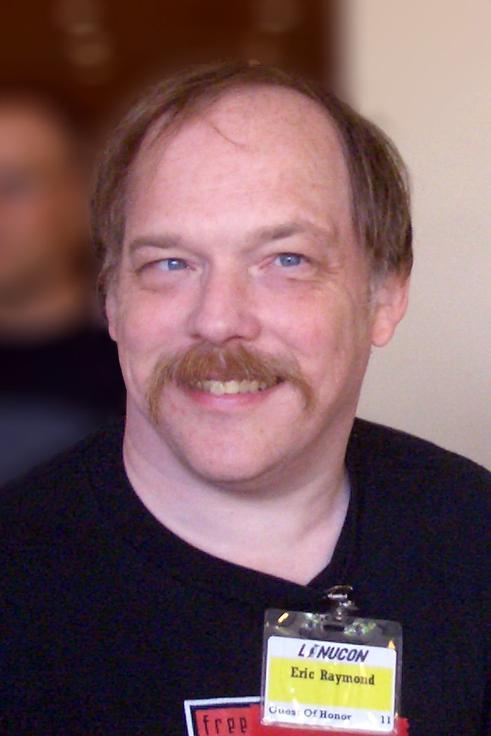
In 1997, Eric S. Raymond presented a paper at the Linux Kongress in Bavaria that would reshape how an entire industry thought about building software. "The Cathedral and the Bazaar" drew a sharp line between two models of development. The cathedral: careful, centralized, release-when-ready. The bazaar: open, decentralized, release-early-and-often. Raymond argued, with considerable evidence from the Linux kernel and his own fetchmail project, that the bazaar would win.
Nearly three decades later, we can evaluate the claim. And the answer is more interesting than a simple yes or no.
What Raymond Actually Argued
The essay's core thesis was that certain software problems (particularly large, complex ones) were better solved by decentralized communities than by centralized teams. Raymond distilled this into several principles, the most famous being Linus's Law: "Given enough eyeballs, all bugs are shallow." With enough contributors examining source code, every bug would be obvious to someone.
He identified several supporting dynamics. Release early and often. Treat your users as co-developers. If you treat beta testers as your most valuable resource, they'll respond by becoming your most valuable resource. Keep the architecture modular enough that contributors can work on pieces independently.
The implicit assumption was ideological as much as technical. Open-source development would succeed because it aligned individual motivation (scratching a personal itch, building reputation, the intellectual satisfaction of solving problems) with collective benefit. No corporate hierarchy required. No cathedral architects directing the work from above.
It was, in its way, a profoundly optimistic vision of human coordination.
Here's what makes the timing remarkable: when Raymond presented his paper in 1997, the term "open source" didn't exist. He was writing about "free software" and the Linux development model. The phrase was coined months later, in February 1998, at a strategy session in Palo Alto, partly catalyzed by the essay's success and Netscape's decision to release the Navigator source code (a decision Raymond's essay directly influenced). The Open Source Initiative followed weeks after that, co-founded by Raymond and Bruce Perens.
The movement Raymond was describing was young. The GNU Project was fourteen years old. The Free Software Foundation was twelve. The GPL was eight. Linux itself was only six. BSD had been circulating since the late 1970s, but the legal battles that nearly killed it were barely resolved. There was no GitHub, no SourceForge, no standardized workflow for distributed contribution. The bazaar Raymond championed was a handful of mailing lists, FTP servers, and the sheer force of Linus Torvalds's integrative judgment.
The essay didn't just describe a revolution. It named one that hadn't named itself yet.
The Bazaar Won
By any quantitative measure, Raymond was right. Linux runs the cloud. Android runs the phone. Firefox and then Chromium reshaped the browser. Apache and then Nginx served the web. PostgreSQL and MySQL handled the data. Python, Ruby, Node.js, Rust, Go: the languages that define modern development are overwhelmingly open-source.
The numbers are staggering. GitHub hosts over 400 million repositories. The Linux kernel has received contributions from over 20,000 individual developers. Every major cloud provider (Amazon, Microsoft, Google) runs on open-source infrastructure. Even Microsoft, which once called Linux a "cancer," now contributes to it, acquired GitHub, and ships a Linux kernel inside Windows.
If you'd told someone in 1997 that the world's most valuable companies would run their businesses on software they didn't own and couldn't fully control, they would have questioned your judgment. Raymond's prediction wasn't just right. It was conservative.
The Cathedral Came Back Wearing Bazaar Clothes
Here's where Raymond's vision diverges from what actually happened. The bazaar won, but the cathedrals adapted.
Meta open-sources PyTorch and Llama. Google open-sources TensorFlow, Kubernetes, Android, and Chromium. Microsoft open-sources VS Code, TypeScript, and .NET. Amazon builds its most profitable business on top of open-source databases, then offers them as managed services. These are not acts of ideological commitment. They are strategic decisions made by organizations with cathedral-scale resources and cathedral-scale ambitions.
The pattern is consistent: open-source the layer you want to commoditize, then capture value at the layer above. Google open-sources Android to commoditize mobile operating systems, then captures value through the Play Store and advertising. Meta open-sources PyTorch to commoditize the AI framework layer, then captures value through the models and services built on top. Amazon doesn't need to own the database; it needs to own the infrastructure the database runs on.
This is what Raymond didn't anticipate. The bazaar model wasn't just adopted by idealists scratching personal itches. It was weaponized by the most powerful corporations in history as a competitive strategy. The BSD licensing disputes that shaped early open-source history look almost quaint compared to the strategic licensing wars that followed.
There's a personal irony here too. Raymond himself wasn't immune to the cathedral's gravitational pull. He received 150,000 pre-IPO shares of VA Linux, briefly making him worth approximately \$36 million. He wrote an essay called "Surprised by Wealth" about the experience, pledging that the money wouldn't change him. By April 2002, the shares were worth \$195,000; he'd held through the entire collapse without selling. The bazaar's chief evangelist got rich, briefly, through the most cathedral-scale financial mechanism in capitalism: Wall Street pre-IPO allocations. The wealth came and went through institutions the bazaar model was supposed to make irrelevant.
Joel Spolsky described this dynamic in 2002 as "commoditize your complements." Open-source your competitors' profit center, and your own products become more valuable. But even Spolsky didn't fully see how far it would go. In 2026, the bazaar is less a revolutionary alternative to the cathedral than a resource the cathedral harvests.
The Efficiency That Created More, Not Less
Raymond's essay focused on the development model: how code gets written, reviewed, and shipped. What he didn't explore was the economic consequence of making infrastructure-quality software free.
When the bazaar model succeeded, it didn't just change how software was built. It changed how much software existed. By making operating systems, web servers, databases, programming languages, and frameworks available at zero marginal cost, the bazaar removed the floor from the cost of building new things. A startup in 2005 could do what a well-funded company in 1995 could not, because the entire stack was free.
The result wasn't less total development effort. It was dramatically more. Linux didn't consolidate the operating system landscape into one efficient platform; it spawned hundreds of distributions, each with its own community, its own design philosophy, its own ecosystem. Free databases didn't mean fewer databases. It meant PostgreSQL, MySQL, MariaDB, SQLite, MongoDB, Redis, CockroachDB, and dozens more, each serving demand that wouldn't have existed if everyone had to pay Oracle prices.
This pattern (efficiency gains leading to expanded consumption rather than reduced effort) has a name in economics, and it shows up everywhere technology reduces the cost of a critical input. The bazaar made software infrastructure cheap, and the world responded by building more software than anyone in 1997 could have imagined.
There's a second-order effect too. By making infrastructure free, the bazaar lowered the cost of building on top of that infrastructure. Entire industries (SaaS, cloud computing, the modern startup ecosystem) simply wouldn't have been viable if everyone had to pay cathedral-model prices for their stack. The VisiCalc pattern repeated itself: a tool that was supposed to eliminate work created new categories of work that dwarfed the original.
And Raymond's own principle (treat users as co-developers) is itself a demand-expanding dynamic. Converting consumers of software into producers means the resource (developer attention) gets deployed more broadly, not more efficiently. More people write code because more people can write code, because the tools are free, the examples are public, and the barrier to participation is a GitHub account.
What Raymond Got Wrong
The essay's blind spots have become painfully clear.
Maintainer burnout. Raymond assumed that contributor motivation was self-sustaining, that people would keep showing up because the work was interesting. He didn't account for the dynamics that emerge when a hobby project becomes critical infrastructure. The OpenSSL library, maintained for years by a handful of volunteers, secured the majority of encrypted web traffic until the Heartbleed vulnerability in 2014 revealed how thin the maintenance layer really was. The left-pad incident, the core-js crisis, the Log4j vulnerability: each demonstrated that the bazaar's supply of labor is not inexhaustible. It concentrates on the exciting work and neglects the essential work.
Free-riding at scale. The essay assumed a rough symmetry between use and contribution. The reality is asymmetric: billions of dollars in commercial value extracted from projects maintained by unpaid or underpaid developers. Amazon took Elasticsearch and offered it as a managed service. When Elastic changed their license to prevent this, the open-source community split. MongoDB, Redis, and HashiCorp followed similar paths, companies that built open-source projects, watched cloud providers commoditize them, and responded by restricting their licenses.
Security supply chains. A bazaar has no gatekeepers, which Raymond saw as a feature. It's also a vulnerability. The SolarWinds attack, dependency confusion attacks, typosquatting on npm: these exploit the trust model that makes the bazaar work. When anyone can contribute, anyone includes adversaries.
Governance. Raymond wrote about the bazaar as if the only governance question was technical: who decides which patches get merged? The real governance questions turned out to be social and economic: who funds maintenance? Who decides licensing changes? Who gets to use the work commercially? These questions have no bazaar-native answers. They require institutions (foundations, companies, legal frameworks) which is to say, they require cathedrals.
The Licensing Wars
The clearest evidence that Raymond's framework was incomplete is the licensing landscape of 2026.
The GPL, which Richard Stallman designed to ensure that modified software remained free, worked well in a world where software was distributed as binaries. The cloud broke that model. If you run GPL software as a service, you never "distribute" it; users interact with the output, not the code. The software is free in theory and proprietary in practice.
The response was a proliferation of new licenses. The AGPL closed the cloud loophole by requiring source availability for network services. The Business Source License (BSL) made code available to read but restricted commercial use until a time-delayed release to open source. The Server Side Public License (SSPL) required that anyone offering the software as a service must open-source their entire stack.
Each of these represents a partial retreat from the bazaar model. Not back to the cathedral (the code is still visible, forkable, auditable) but to something Raymond didn't envision: a commons with fences. The ideological purity of "free as in freedom" collided with the economic reality that freedom without reciprocity becomes exploitation.
The BSD licensing story foreshadowed this. The permissive BSD license allowed commercial forks without contribution back. This wasn't a problem when the commercial ecosystem was small. When the commercial ecosystem became the entire cloud computing industry, the lack of reciprocity became untenable for projects that couldn't attract cathedral-scale corporate sponsorship.
What Raymond Got Right
Despite these blind spots, the essay's core insight has proven durable: for certain classes of problems, decentralized coordination outperforms centralized planning.
This isn't because decentralized systems are morally superior. It's because they solve the information problem differently. A cathedral architect must understand the entire system well enough to direct work from above. A bazaar participant only needs to understand their local patch well enough to improve it. As systems grow in complexity, the information burden on the cathedral architect grows faster than the burden on any individual bazaar participant.
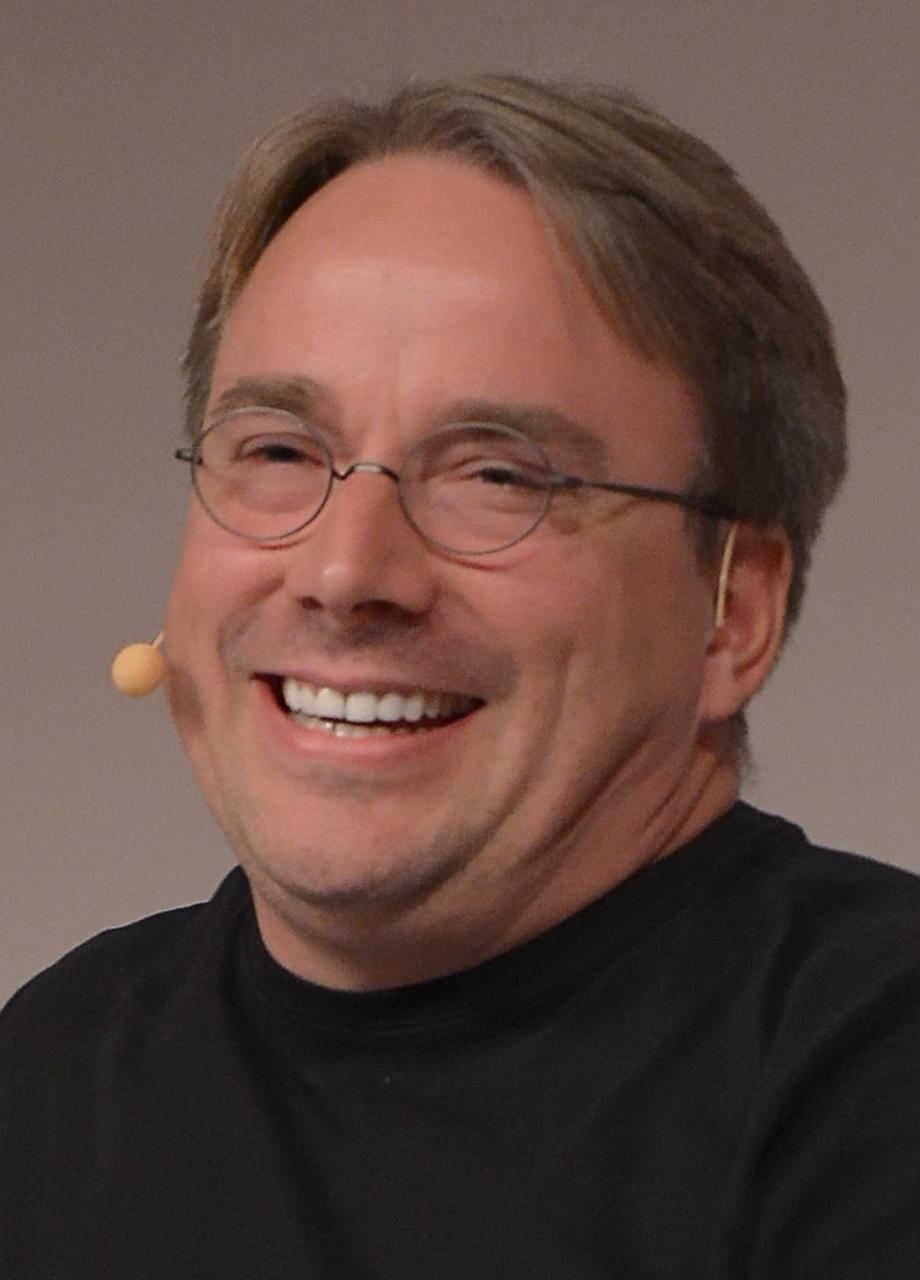
The Linux kernel is the proof. No single person understands the entire Linux kernel. It's too large, too complex, spanning too many hardware architectures and subsystems. But the kernel works, and works remarkably well, because the development model doesn't require any single person to understand it all. Subsystem maintainers understand their domains. Linus Torvalds understands the integration points. Contributors understand the specific problems they're solving. The architecture of the development process mirrors the architecture of the software.
This insight extends beyond software. Wikipedia works on bazaar principles. Citizen science projects like Galaxy Zoo and Foldit leverage distributed human attention. Even hardware design is slowly moving in this direction, though the marginal cost of atoms versus bits creates structural barriers that software doesn't face. The concept of second-sourcing (multiple manufacturers producing compatible chips) is, in a sense, the hardware world's version of the bazaar. The Z80 survived for nearly fifty years partly because Zilog couldn't monopolize it.
Raymond also got the motivational model roughly right, even if the details were off. People do contribute to open-source projects for intrinsic reasons: intellectual satisfaction, reputation, the desire to solve problems that matter to them personally. The mistake was assuming these motivations were sufficient at industrial scale, without institutional support.
The Bazaar in 2026
The open-source landscape of 2026 bears little resemblance to what Raymond described in 1997, but the dynamics he identified are still operating.
The bazaar model made software infrastructure so cheap that it created more demand for software than any cathedral could have supplied. It enabled the cloud, the startup ecosystem, the AI revolution, all built on free foundations. The efficiency didn't reduce consumption. It unlocked latent demand that dwarfed the original market.
At the same time, the cathedral never disappeared. It adapted. The most sophisticated cathedrals now build bazaars strategically, open-sourcing frameworks and tools that make their own proprietary services more valuable. Meta's contribution to PyTorch isn't charity. Google's contribution to Kubernetes isn't ideology. They're infrastructure investments that make the entire ecosystem dependent on capabilities only cathedral-scale organizations can provide.
The result is a layered system more nuanced than Raymond's binary. At the bottom: genuine bazaar-model projects maintained by communities (the Linux kernel, PostgreSQL, countless libraries). In the middle: corporate-sponsored projects that look like bazaars but serve cathedral strategies (Kubernetes, Chromium, Llama). At the top: proprietary services built on open foundations (AWS, Google Cloud, OpenAI's API).
Each layer depends on the ones below it. Each layer captures value differently. And the whole structure is held together by a web of licenses, foundations, corporate agreements, and social norms that Raymond's 1997 essay couldn't have anticipated.
What's strangest about this arrangement is its circularity. Corporations adopted open source because it was free and good. Volunteer maintainers couldn't scale to meet corporate demand; Heartbleed and Log4j proved that. So corporations began funding open-source projects to keep their own infrastructure stable. But funding brought governance influence. The top Linux kernel contributors aren't hobbyists scratching personal itches. They're engineers employed by Google, Microsoft, Red Hat, Intel, and Huawei, steering the roadmap toward their employers' needs. Kubernetes evolves in ways that benefit Google Cloud. PyTorch evolves in ways that benefit Meta's AI stack.
The projects became dependent on corporate funding. But the corporations became equally dependent on the projects. If Google pulled out of Kubernetes, the project would struggle. If Kubernetes collapsed, Google Cloud would struggle. So Google funds it more, which deepens the entanglement, which makes withdrawal more costly, which demands more funding. The snake eats its own tail.
Google and Amazon compete ferociously in cloud computing, but they cooperate on the same open-source infrastructure that both their businesses require. They're rivals building on shared foundations that neither can afford to let fail and neither fully controls. The commons isn't independent anymore, but neither are the corporations.
Raymond imagined the bazaar as freedom from institutional dependency. What emerged is mutual capture. The cathedral could fire its architects. The bazaar's corporate sponsors can't walk away from the bazaar, and the bazaar can't survive without them. Independence became entanglement, and the entanglement, paradoxically, is what makes the system work.
The Essay Worth Rereading
Raymond saw something real about how coordination works in networks. He was right that the bazaar model could produce software of extraordinary quality and scale. He was right that decentralized development could solve problems that centralized approaches couldn't. He was right that open-source would reshape the industry.
He was wrong about the institutional vacuum. The bazaar didn't eliminate the need for cathedrals; it changed what cathedrals do. They no longer build the infrastructure. They build on top of it, around it, and through it. The most powerful technology companies in the world are cathedral organizations that have learned to cultivate bazaars for strategic advantage.
"The Cathedral and the Bazaar" is worth rereading in 2026 not because it predicted the future correctly (no essay could, across three decades) but because it identified dynamics that, once set in motion, produced outcomes no one predicted. The bazaar made software free, and free software made more software. The cathedrals adapted, and their adaptation made the bazaar more important, not less. Raymond's binary became a symbiosis that neither model, alone, could have produced.
The essay ends with Raymond quoting Robert Browning: "A man's reach should exceed his grasp, or what's a heaven for?" The reach exceeded. The grasp caught something different than expected. That's not a failure of vision. That's how ideas work when they meet reality.