
Citrini Research recently published a piece called "The 2028 Global Intelligence Crisis", a thought experiment modeling a scenario in which AI-driven white-collar displacement triggers a cascading economic crisis. In their telling, AI replaces workers, spending drops, firms invest more in AI to protect margins, AI improves, and the cycle repeats. They call it the "Intelligence Displacement Spiral" and project a 57% peak-to-trough drawdown in the S&P 500. No natural brake. No soft landing.
It is a well-constructed stress test, and worth reading on its own terms. But the scenario achieves its conclusion by modeling only the displacement side of an efficiency revolution while treating the demand-expansion side as essentially zero. This is the core analytical gap, and it is precisely the gap that Jevons Paradox addresses.
I have written about Jevons Paradox before in the context of the semiconductor industry, specifically how improvements in energy efficiency from the transistor through GPUs have consistently driven more total energy consumption, not less, by making computing cheap enough to permeate every corner of the economy. The same framework applies to AI and cognitive labor, and the Citrini piece is a useful foil for exploring why.
What Jevons Paradox Actually Says

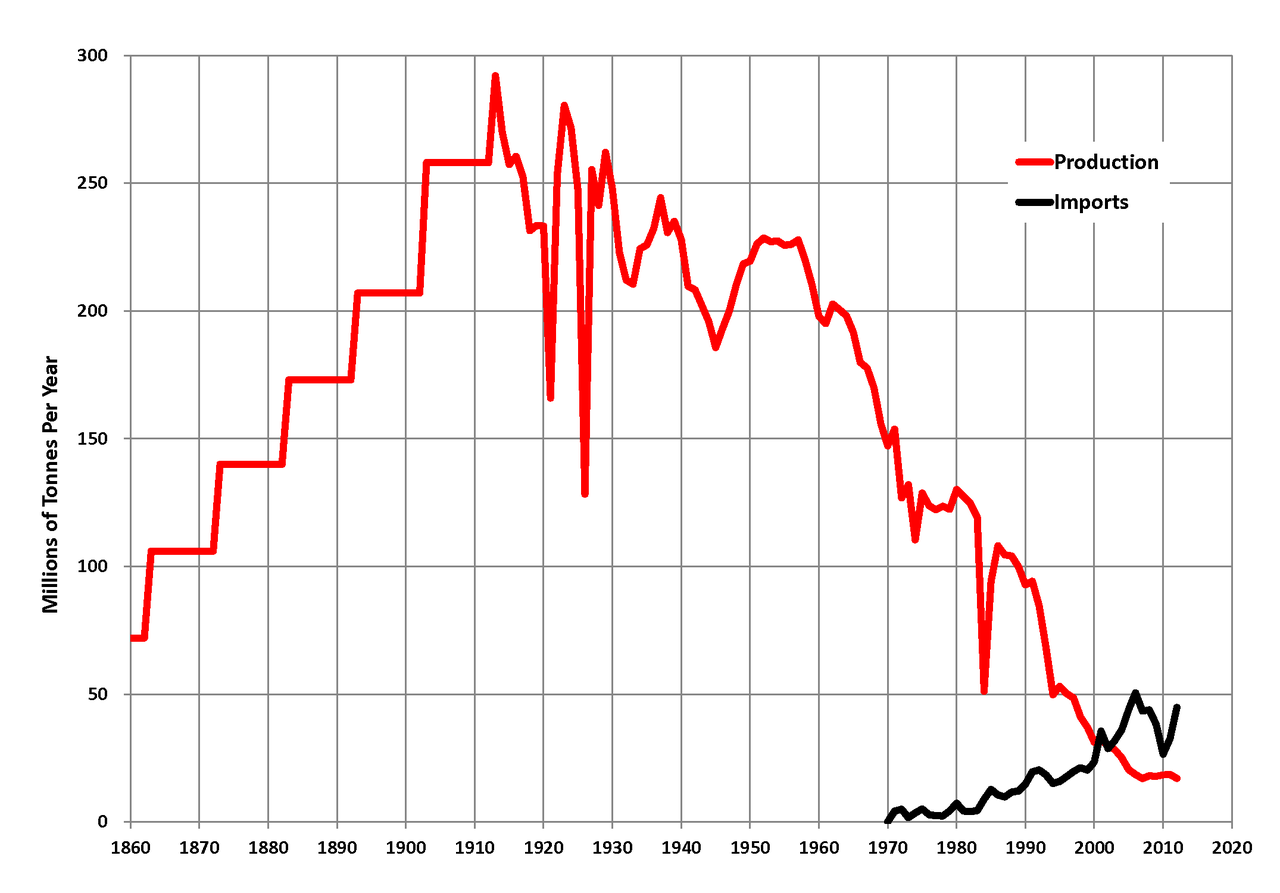
In 1865, the English economist William Stanley Jevons observed something counterintuitive about coal consumption in Britain. James Watt's steam engine had made coal use dramatically more efficient; you could extract far more useful work per ton of coal than before. The intuitive expectation was that Britain would use less coal. The opposite happened. Total coal consumption surged, because the efficiency gains made coal-powered activities so much cheaper that entirely new applications emerged. Factories that couldn't justify coal-powered machinery at the old efficiency levels now could. Industries that had never used steam power adopted it. The per-unit savings were overwhelmed by the explosion in total units demanded.
This pattern has recurred across nearly every major input cost reduction in economic history. Semiconductor efficiency improved by roughly a trillionfold over six decades, and total spending on computing did not decline; it expanded from a niche military and scientific expenditure to a multi-trillion-dollar global industry. Bandwidth costs collapsed through the 1990s and 2000s, and total bandwidth consumption didn't decrease; it increased by orders of magnitude as streaming video, social media, cloud computing, and mobile internet emerged. LED lighting is roughly 90% more efficient than incandescent bulbs, and total global illumination has increased, not decreased, as cheap lighting enabled new architectural designs, 24-hour commercial operations, and decorative applications that were uneconomical before.
The mechanism is straightforward: when a critical input becomes dramatically cheaper, the addressable market for everything that uses that input expands. New use cases emerge that were previously uneconomical. Existing use cases scale to populations that were previously priced out. The total consumption of the now-cheaper input rises even as the per-unit cost falls.
The Citrini piece implicitly models AI as a substitution technology: it replaces human cognitive labor, and that's the end of the transaction. Jevons Paradox suggests AI is simultaneously, and perhaps primarily, an expansion technology: it makes cognitive services so cheap that demand for them can grow faster than the displacement effect.
Latent Demand Is Enormous and Unmeasured
The Citrini scenario treats the economy as having a fixed quantity of cognitive work. AI absorbs that work, the workers who performed it lose their income, and aggregate demand collapses. But the reason cognitive work costs what it does is that human intelligence has been scarce and expensive. This scarcity has suppressed enormous categories of demand that simply don't show up in current GDP accounting because they've never been economically feasible.
Consider education. The average American family cannot afford personalized tutoring. A human tutor at \$50-100 per hour is a luxury good. If AI reduces the cost of competent, personalized educational support to near zero, the addressable market isn't the current tutoring market; it's every student in the country. That is a market expansion of potentially 50x or more relative to the existing tutoring industry. The humans who previously worked as tutors are displaced, yes, but the economic activity generated by tens of millions of students receiving personalized education (and the downstream productivity gains from a better-educated workforce) is a new demand category that didn't exist before.
The same logic applies across dozens of sectors. Legal services: roughly 80% of Americans who need legal help cannot afford it. Personalized financial planning: currently available only to households with six-figure investable assets. Preventive health analysis: limited by the number of available clinicians. Custom software for small businesses: a \$50,000 engagement is out of reach for a business generating \$300,000 in annual revenue. Architecture and design services for middle-income homeowners. Personalized nutrition and fitness programming. Translation and localization for businesses that currently operate only in one language.
These are not speculative categories. They are documented, unmet needs constrained by the cost of the human intelligence required to serve them. When AI collapses those costs, the question is whether the demand expansion across all of these categories (and others we haven't imagined) can offset the displacement in existing roles. The Citrini piece assumes the answer is no without modeling the question. Jevons Paradox, and the historical base rate, suggests the answer is more likely yes.
The Citrini Piece's Own Evidence Supports Jevons
The piece acknowledges two canonical examples of technological displacement that didn't produce net job losses: ATMs (bank teller employment rose for 20 years after their introduction, because cheaper branch operations led to more branches) and the internet (travel agencies, the Yellow Pages, and brick-and-mortar retail were disrupted, but entirely new industries emerged in their place). It then dismisses both by asserting that "AI is different because it improves at the very tasks humans would redeploy to."
But this is precisely what critics said at every prior inflection point. When mechanized looms were introduced in the early 19th century, displaced textile workers could not "redeploy" to weaving; the machines did the very thing they were trained for. What actually happened was that radically cheaper cloth created demand for fashion, retail distribution, global trade logistics, cotton cultivation, and marketing, categories that scarcely existed at the prior cost structure. The weavers didn't get their old jobs back. They moved into an economy that had been restructured around abundant, cheap textiles, and that economy was far larger than the one it replaced.
The Citrini piece's own scenario contains evidence of Jevons-style expansion that it frames exclusively as destruction. The section on agentic commerce describes consumers using AI agents that eliminate friction: price-matching across platforms, renegotiating subscriptions, rebooking travel. The article frames this as the death of intermediation moats. But it is equally a story of market expansion. When an AI agent assembles a complete travel itinerary faster and cheaper than Expedia, the result isn't just that Expedia loses revenue. It's that people who previously found trip planning too cumbersome or too expensive now take trips. Total travel volume can increase even as per-trip intermediation costs fall.
The DoorDash example is even more explicit. The article describes vibe-coded competitors passing 90-95% of delivery fees to drivers, and AI agents shopping across twenty platforms for the best deal. Delivery becomes cheaper for consumers and more remunerative for drivers. The article frames this as destruction of DoorDash's moat. From a Jevons perspective, it's a textbook demand expansion setup: cheaper delivery means more people order delivery, more restaurants offer delivery, and total delivery volume grows.
The Feedback Loop Has a Natural Brake
The article's most powerful rhetorical device is the claim that the Intelligence Displacement Spiral has "no natural brake." This is the critical assertion on which the entire doom scenario depends, and it is the assertion most directly challenged by Jevons Paradox.
The natural brake is price-driven demand expansion. As AI makes cognitive services cheaper, consumers gain access to goods and services they couldn't previously afford. This is true even for displaced workers operating at lower income levels. A former product manager earning \$45,000 as an Uber driver cannot afford a human financial advisor, but can access AI-driven financial planning for near zero cost. They cannot afford a human tutor for their children, but can access AI tutoring. They cannot afford custom software to start a small business, but can build an application using AI tools. The consumption basket shifts: less spending on expensive human-mediated services, more consumption of cheap AI-mediated services that were previously unattainable.
This doesn't make the individual worse off on net; it partially offsets the income decline through dramatically lower cost of living for intelligence-intensive services. The article's "Ghost GDP" concept (output that shows up in national accounts but doesn't circulate through the real economy) assumes that the efficiency gains accrue entirely to capital owners. But the article itself documents intense competition. Dozens of vibe-coded delivery startups competing for share. Agentic shoppers forcing prices down across every category. Stablecoin payment rails bypassing card interchange fees. In competitive markets, efficiency gains don't stay with producers; they flow to consumers through lower prices. That flow is the transmission mechanism through which Jevons effects operate, and the article describes it vividly while somehow not recognizing it as a countervailing force.
The OpEx Substitution Framing Conceals the Demand Side
The article makes an astute observation that AI investment increased even as the economy contracted, because companies were substituting AI OpEx for labor OpEx. A company spending \$100M on employees and \$5M on AI shifts to \$70M on employees and \$20M on AI, so total spending falls while AI spending rises. This explains why the AI infrastructure complex continued performing even as the broader economy deteriorated.
This is a credible supply-side analysis. But it omits the demand-side consequence. If a company produces the same output with fewer workers at lower total cost, competitive pressure pushes the price of that output down. Falling prices expand the addressable market. A SaaS product that cost \$500,000 annually and was affordable only to the Fortune 500 now costs \$50,000 and is accessible to mid-market companies. A consulting engagement that cost \$2 million and was reserved for large enterprises now costs \$200,000 and is available to growth-stage companies. The total number of transactions can grow even as per-transaction revenue falls.
The article models a world where output stays constant, prices stay constant, costs drop, and the entire surplus accrues to shareholders. In practice, the intense competition the article itself describes (incumbents in knife-fights with each other and with upstart challengers) is precisely the mechanism that prevents this. Competition distributes efficiency gains through lower prices, and lower prices expand markets.
The Intelligence Premium Unwind Is Also a Jevons Story
The article's most compelling framing is that human intelligence has been the scarce input in the economy for all of modern history, and AI is unwinding that premium. Every institution (the labor market, mortgage underwriting, the tax code) was designed for a world where human cognition was expensive and irreplaceable. As AI makes intelligence abundant, these institutions crack.
Jevons Paradox applied to this framing produces a different conclusion. When intelligence becomes abundant and cheap, the economy doesn't just produce the same cognitive output more efficiently; it restructures around consuming vastly more intelligence. We don't merely replicate the existing quantity of analysis, decisions, creative output, and coordination at lower cost. We produce orders of magnitude more of it.
The article's own data point supports this: by March 2027 in their scenario, the median American was consuming 400,000 tokens per day, a 10x increase from the end of 2026. The article cites this as evidence of disruption, but it is fundamentally a Jevons data point. People are consuming more intelligence, not less. That consumption drives economic activity; someone is building the products and services that consume those tokens, maintaining the infrastructure, curating quality, arbitrating edge cases, and inventing new applications.
The question is whether that new economic activity employs enough people at high enough wages to offset the displacement. The article assumes it doesn't. History suggests it tends to, though the transition period can be painful and the new employment categories often look nothing like the old ones.
The GDP Composition Argument Cuts Both Ways
The article makes much of the fact that 70% of US GDP is consumer spending, and that white-collar workers drive a disproportionate share of that spending. When those workers lose income, the consumption base collapses, and GDP follows. This is mechanically sound as far as it goes.
But Jevons Paradox suggests that the composition of GDP shifts during efficiency revolutions, not just the level. When agricultural mechanization displaced 90% of farm workers over the course of a century, it did not produce a permanent 90% unemployment rate. GDP restructured around manufacturing and services, categories that were economically marginal when most human labor was occupied with food production. The displaced agricultural workers didn't return to farming. They moved into an economy where cheap food freed up income and labor for other activities.
The analogous question for AI is: when cognitive labor becomes cheap, what does the economy restructure around? The Citrini piece doesn't attempt to answer this, which is understandable, since predicting the specific industries of the future is a fool's errand. But the pattern is well-established. Cheap food led to a manufacturing economy. Cheap manufacturing led to a services economy. Cheap cognitive services leads to something else. The article's scenario assumes the chain terminates with "cheap cognitive services leads to nothing," which is historically unprecedented.
One plausible direction: the economy shifts toward activities where physical presence, human trust, and embodied experience carry a premium precisely because cognitive tasks are commoditized. Healthcare delivery (not diagnosis, but care), skilled trades, experiential services, community-oriented businesses, and creative work that is valued specifically for its human origin. These are not futuristic speculations; they are existing sectors where human presence is intrinsic to the value proposition. As AI deflates the cost of cognitive services, the relative value of irreducibly human activities increases, and spending may shift toward them.
Another direction, potentially larger: entirely new categories of economic activity that we cannot yet name, because they only become viable when intelligence is cheap and abundant. The internet didn't just make existing activities more efficient; it created social media, the gig economy, e-commerce logistics, content creation as a profession, and cloud computing as an industry. None of these were predicted in advance. The equivalent AI-native industries may already be emerging in nascent form, invisible to a GDP accounting framework built for the prior economic structure.
Where the Speed Concern Is Legitimate
The strongest element of the Citrini scenario is the speed argument. Prior Jevons cycles unfolded over decades, long enough for institutions, education systems, and labor markets to adapt. The article's timeline compresses displacement into roughly 18-24 months, far faster than the demand-expansion side can respond.
This is a legitimate concern, and it's where the Jevons counter-argument is weakest. If displacement is fast and demand expansion is slow, the interim period can be genuinely severe, even if the long-run equilibrium is positive. Policy response, education, and institutional adaptation all operate on timescales measured in years, not quarters.
However, the article makes an asymmetric assumption on this point. It models disruption happening at AI speed: step-function capability jumps, immediate corporate adoption, rapid layoff cycles. But it models demand expansion as essentially static, only emerging when government intervention eventually arrives. This ignores that entrepreneurial response to dramatically cheaper inputs has historically been fast. The smartphone created a trillion-dollar app economy in under five years. Cloud computing spawned tens of thousands of SaaS companies within a decade. When a critical input becomes 100x cheaper, entrepreneurs move quickly to build products that exploit the new cost structure, because the profit opportunity is enormous.
The article's scenario includes dozens of vibe-coded delivery startups appearing rapidly, which is itself evidence of fast entrepreneurial response to cheaper intelligence. It just doesn't extend that observation to other sectors.
Where the Counter-Argument Must Be Honest
Jevons Paradox is not a universal law. It describes a tendency (a strong historical pattern) not an iron guarantee. The Citrini piece's most potent rebuttal is that prior Jevons cycles involved specific resource inputs (coal, compute, bandwidth, lighting), while AI targets the general-purpose input of intelligence itself. If AI can perform not only existing cognitive tasks but also the new tasks that would emerge from demand expansion, then the rebound effect could be muted or eliminated entirely. A coal-fired loom couldn't design fashion or run a retail chain. But an AI that can code, analyze, write, plan, and reason might well be capable of staffing the very industries that Jevons expansion would create.
This is a genuine uncertainty, and intellectual honesty requires acknowledging it. The question reduces to whether human judgment, taste, coordination, creativity, physical presence, and social trust constitute a durable residual demand (activities where humans remain preferred or necessary even when AI is technically capable) or whether those too get absorbed over time. The honest answer is that we don't know.
What we do know is that the historical base rate strongly favors Jevons over the doom loop. Every prior prediction that a general-purpose technology would produce permanent mass unemployment (mechanized agriculture, factory automation, computerization, the internet) has been wrong, and wrong for the same reason: the predictions modeled displacement without modeling demand expansion. The Citrini piece, for all its sophistication, repeats that analytical pattern.
The Bottom Line
The Citrini piece is worth reading as a risk scenario. The transitional pain it describes is plausible, and portfolio construction should account for it. But as a base case for the future of the economy, it requires assuming that the most consistent empirical pattern in economic history (that radically cheaper inputs generate demand that exceeds displacement) has finally broken. That's a bet against a very long track record.
For more on the mechanics of Jevons Paradox and how it has played out across the semiconductor industry from vacuum tubes to modern AI accelerators, see my earlier piece: Jevons Paradox and the Semiconductor Industry.